AI Assets - Local AI agent discovery on endpoints
For teams still managing AI agents like ordinary software, it’s time for a mindset shift. Local AI agents operate inside the endpoint. They interact directly with the OS, accessing file systems, reading clipboard data, spawning processes, and executing complex workflows. And until now, much of this activity has been largely invisible to traditional controls.
Most third-party tools (CASB, SaaS security, AI governance platforms) focus on:
They often miss local AI agents running directly on endpoints.
AI agents are no longer just cloud-based — they’re running locally on endpoints, accessing files, credentials, and system processes. That makes them powerful… and a potential blind spot.
That’s why Local AI agent discovery in Microsoft Defender for Endpoint (Preview) is a major step forward.
Defender now automatically discovers local AI agents across Windows and macOS including coding agents and IDE extensions and brings them directly into your security operations workflow.
Full visibility
Risk and exposure awareness
Active defence
Broader coverage
Integrated governance
Defender advantage:
What you can do with it:
Outcome
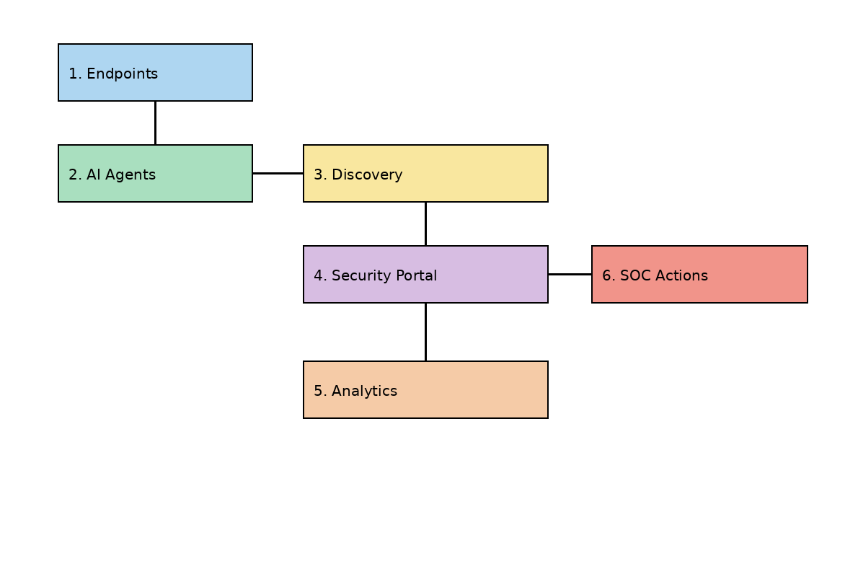
A High-level AI Assets workflow is outlined below:
Endpoints >> AI Agents >> Discovery >> Security Portal >> Analytics >> SOC Action
Bottom line
Requirements: Microsoft Defender for Endpoint Plan 2
Typical deliverables:
How Spartans Security Helps
Spartans Security helps organisations manage AI agents entering their environments faster than they can be governed. We help organisations quantify risk and bring these agents under operational control, enabling organisations to scale AI adoption securely and responsibly.
#CyberSecurity #AI #MicrosoftDefender #EndpointSecurity #AIGovernance #GenAI


.png)